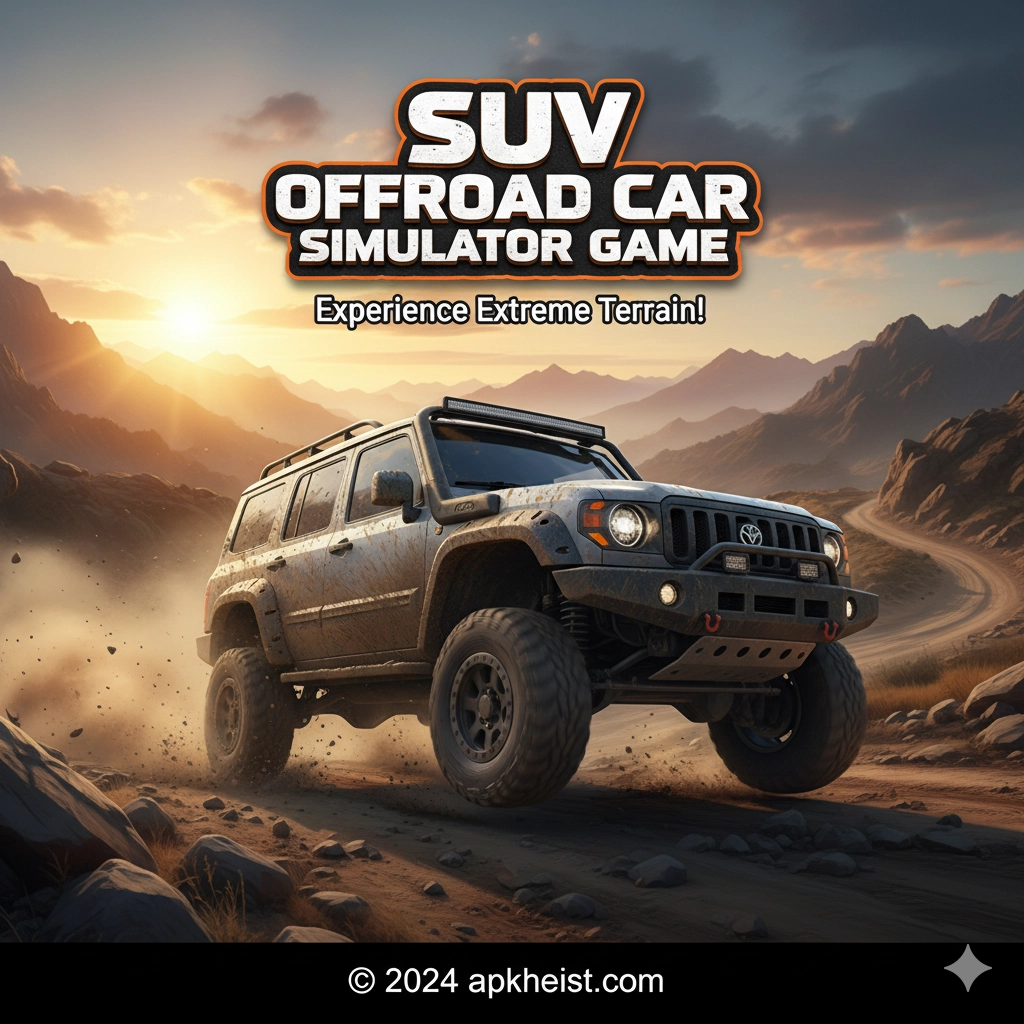
Column lead: Whether you’re a casual player seeking scenic drives or a competitive sim racer chasing realistic physics, this article serves as a single reference for building, driving, and mastering off-road SUVs. Along the way you’ll find practical tips, recommended upgrades, and answers to the most common questions players face.
Index — quick navigation
1. Getting Started: Controls & Interface — A brief primer so you can drive without stumbling over settings.
2. Vehicle Types & When to Use Them — Compare light crossovers, heavy SUVs, and expedition rigs.
3. Tuning & Upgrades That Matter — The upgrades that deliver the biggest off-road returns.
4. Terrain Types & Driving Techniques — How to approach mud, sand, rock, and snow.
5. Missions, Events, and Progression — Best ways to earn currency and unlock content.
6. Multiplayer & Competitive Modes — Cooperative exploration and leaderboard tactics.
7. Common Problems & Troubleshooting — Performance, controls, and physics fixes.
1. Getting Started: Controls & Interface
Before attempting technical trails, familiarize yourself with core controls: throttle modulation, precise braking, handbrake use, steering sensitivity, and camera views. Many players rush into booster-style driving; in an off-road sim, subtle throttle control is essential. Spend the first 20–30 minutes in an open practice area adjusting sensitivity and braking assist. If the game offers multiple control schemes (tilt, touch, gamepad), test each and choose one that offers consistent inputs. The UI often includes a compass, gradient indicator, and damage readout — learn what each icon represents. For mobile play, map the most-used functions to reachable areas of the screen; for desktop or controller play, reduce dead zones and fine-tune vibration settings so you feel terrain feedback without losing steering precision.
Practical tip: toggle realistic damage and traction assist in incremental steps — complete one run with assists on, then disable one feature and assess the difference. This progressive approach avoids a steep learning curve.
Related reading: casual contextual crossover content like Hustle Castle Game — Complete Guide can help you understand progression mechanics in mobile titles and how to pace upgrades.
2. Vehicle Types & When to Use Them
Off-road games typically include several vehicle archetypes: light utility crossovers with superior agility, midweight SUVs balancing grip and power, heavy expedition rigs that absorb punishment, and specialized rock-crawlers with extreme articulation. Choose vehicles according to mission design — reconnaissance and time trials favor nimble crossovers; rescue missions and heavy-load transports require torque-rich rigs. Understand the underpinnings: wheelbase length affects stability on slopes, center of gravity influences rollover risk, and differential type (open vs. locking) determines traction recovery ability. When presented with vehicle comparison charts in the garage, prioritize torque and ground clearance for technical trails, but do not neglect suspension travel — more travel equals better obstacle compliance. Upgrading a lighter platform with bigger tires can sometimes outpace simply buying the heaviest SUV; balance matters.
For reference on how games structure classes and meta-progression, examine content like Werewolf Voice — The Ultimate Social to see how niche features are explained clearly to players.
3. Tuning & Upgrades That Matter
Effective upgrades focus on three pillars: traction, power delivery, and survivability. Traction upgrades include tires (compound and tread), differential locks, and electronic traction control tuning. Power upgrades are torque curves, turbochargers, and transmission gearing — for off-road work, prioritize low-end torque over peak horsepower. Survivability upgrades include reinforced bumpers, skid plates, and suspension strengthening. Suspension tuning is the most technical but the most rewarding: soften compression for rough, choppy trails to keep all wheels in contact; increase rebound damping when driving through deep ruts or at speed to avoid pogo motion. Tire pressure systems (if the simulator includes tire deflation/inflation) are a game-changer — lower pressures increase contact patch and flotation in sand or snow, while higher pressures reduce rolling resistance on hardpack.
Upgrade path strategy: focus on a single vehicle and kit it for multiple types (modular setup) rather than spreading upgrades thin across many cars. This reduces grinding and yields consistent performance across mission types.

4. Terrain Types & Driving Techniques
Each terrain requires distinct tactics. On mud, maintain steady throttle and avoid wheelspin; use momentum and follow existing tracks. In sand, use wave-like throttle modulation and higher gear to avoid digging in. On rocks, crawl slowly, use locking diffs, and choose lines that keep tires on high points to avoid body contact. For steep slopes, approach at an angle when possible to reduce the effective gradient, and avoid sudden steering inputs which shift the weight and increase rollover risk. When traversing water, check for current indicators and depth warnings; engine intake and exhaust position matter — if the sim models engine hydrolock or electrical failure, take shallower crossings or fit snorkels where available. Snow and ice demand smooth steering and early braking; ABS systems will pulse and can be counterproductive in deep snow where controlled sliding is better.
Use camera presets strategically: hood view for precise wheel placement during rock crawling, third-person follow for momentum runs. Learning to read the terrain visually (ruts, crown, and transition zones) is a top-tier skill separating casual players from experts.
For diverse mission design ideas and event structures, consult complementary guides such as MedarotS — The Ultimate Robot Battle, which illustrate how progression loops keep players engaged across varied content.
5. Missions, Events, and Progression
Progression systems vary between linear campaign maps, open-world exploration, and event-based seasons. Prioritize missions that offer upgrade parts or currency over cosmetic rewards early on. Daily challenges and time-limited events often yield multiplier rewards — complete these with tuned loadouts optimized for the objective. Reputation or faction systems may unlock vendor discounts or exclusive rigs; aim to complete faction objectives concurrently to accelerate access to rare parts. When the game includes an expedition system (supply runs, resource gathering), balance immediate needs with long-term ROI — investing in a cargo rack and winch early reduces future grind by enabling more complex missions.
Mechanics to watch for: energy/stamina systems that gate session length, matchmaking that scales difficulty with vehicle power (power creep), and RNG in loot tables. Build a target list of must-have parts and farm the shortest, most reliable missions to acquire them efficiently.
6. Multiplayer & Competitive Modes
Off-road sims that include multiplayer create opportunities for cooperative recovery, convoy missions, and competitive hill climbs or time trials. Cooperation tactics: assign roles (scout, hauler, recovery) based on vehicle loadouts; always carry a winch and recovery gear for convoys, and establish hand signals or quick-chat macros if voice is unreliable. In competitive mode, understand how the meta favors traction management and route optimization; raw speed rarely wins in technical multiplayer events. Leaderboards may reward optimized telemetry — experiment with minimal body roll and tuned gear ratios to shave seconds off climbs. If the game supports clan or guild features, coordinate upgrade sharing and pooled resources to accelerate group progression.
Community-run events often provide unique rewards; monitor official channels and in-game notices so you don’t miss limited-time content. For examples of persistent community-driven progression, examine game ecosystems such as Modern Warfare: Elite Forces to see how competitive frameworks are structured.
7. Common Problems & Troubleshooting
Performance issues: lower shadow and particle settings first; off-road sims often render dynamic debris and water which are GPU-intensive. Control problems: recalibrate input devices and reduce steering sensitivity if the vehicle overcorrects. Physics oddities: if vehicles twitch or clip through geometry, try toggling physics presets (realistic/arcade) or update to the latest patch; many issues are patched quickly by developers. If progression stalls due to a stuck mission, check community forums for known bugs and temporary workarounds; developers often recommend reloading an earlier checkpoint or restarting the match instance.
Always keep save backups if the game allows manual saves. If multiplayer matchmaking frequently produces unfair matchups, change region settings or join friends directly to ensure balanced sessions.
Related guides and inspiration for mission pacing and UX can be found in articles such as Cotton Candy Shop Cooking Game and Stickman vs Monster: Idle RPG Game, which showcase different approaches to player retention and rewards.
FAQ: Frequently Asked Questions about SUV OffRoad Car Simulator Game
Q1: What is the best starting vehicle for beginners?
A1: Choose a midweight SUV with balanced torque and moderate ground clearance. These vehicles are forgiving on steering inputs and provide enough traction for most beginner trails. Avoid ultra-light crossovers (too twitchy) and heavy expedition rigs (slow recovery and higher learning curve).
Q2: How should I set tire pressure for sand and mud?
A2: In-game, lower tire pressure for sand and soft snow to increase the contact patch for flotation; for mud, slightly lower pressure helps, but avoid excessive deflation which increases sidewall deformation and steering sluggishness. On hardpack and rock, increase pressure for sharper steering response and reduced rolling resistance.
Q3: Are winches and snorkels necessary?
A3: Winches are essential for technical multiplayer and deep mud scenarios; always carry one on expedition or recovery missions. Snorkels matter only if the simulator models engine hydrolock or water ingress — otherwise they are cosmetic or marginally protective. Prioritize winches for universal utility.
Q4: How do I avoid rollovers on steep slopes?
A4: Reduce speed, approach at an angle to reduce effective gradient, shift weight rearward when ascending loose slopes for traction, and avoid sudden steering or throttle surges. Use a lower gear to keep RPMs steady and avoid abrupt torque spikes that shift the vehicle’s center of mass.
Q5: Which upgrades give the best value early game?
A5: Invest in better tires, a modest suspension kit, and a decent differential lock. These improve traction and handling more than raw horsepower in off-road conditions. A basic winch yields outsized utility for recovery and mission flexibility.
Q6: Can I play competitively without premium purchases?
A6: Yes. Most skill-based leaderboards reward technique and tuning over outright paid power. Focus on learning lines, optimizing gearing, and mastering terrain-specific strategies. Premium items may speed progression but are rarely required for top-tier performance if you master game mechanics.
Q7: Where can I find community resources and mission guides?
A7: Look for official forums, subreddit communities, and third-party guide sites. Developer patch notes and event pages are critical for staying current. For inspiration on how communities document mechanics and build guides, review articles such as MP Saara App, Mastering Your Network: AT&T Smart Home, and Habitify — Master Your Routines.
Closing notes: SUV OffRoad Car Simulator Game rewards patient learning, methodical tuning, and a thoughtful approach to terrain. Start with modest goals, tune a single vehicle for versatility, and slowly expand your garage as you master the simulator’s core physics. Happy driving — and respect the recovery strap.