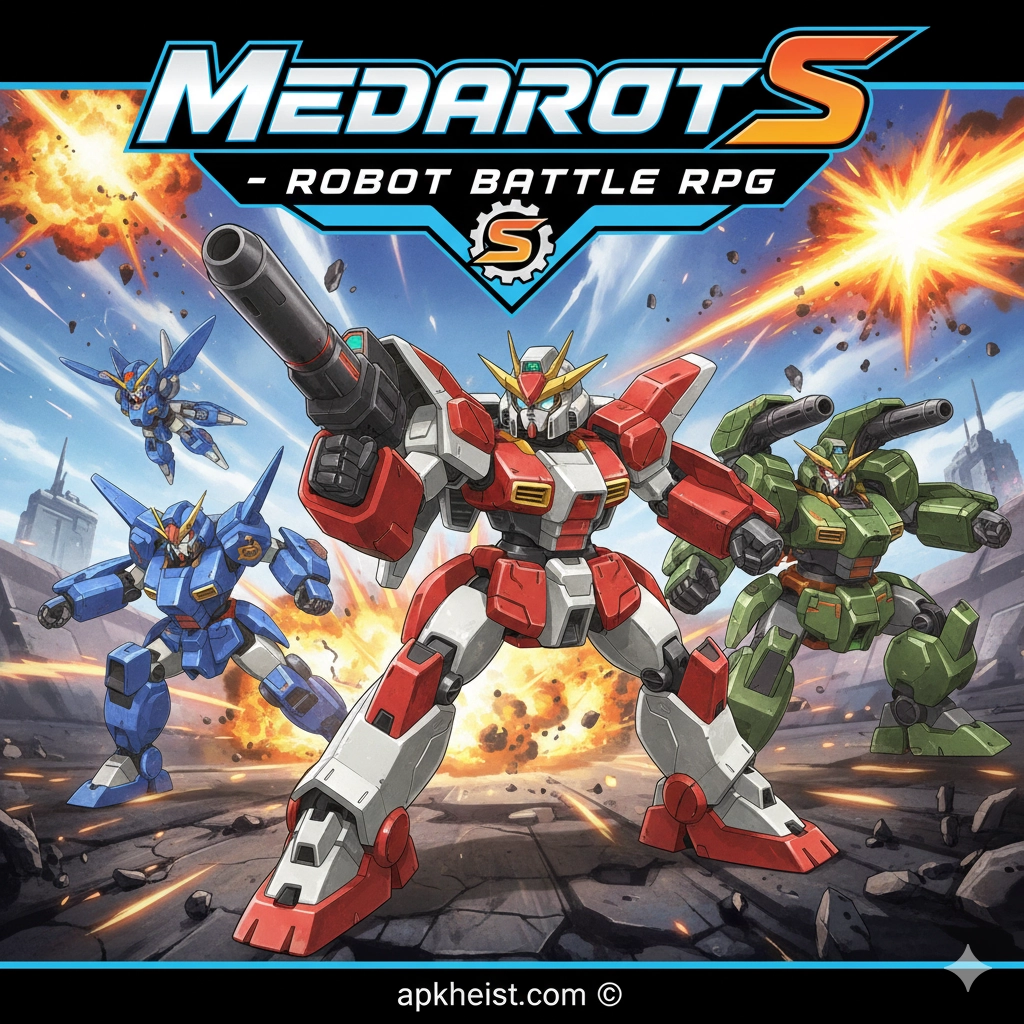
Long intro: MedarotS — Robot Battle RPG — Game places the player in a world where small robots called Medarots (or “Medabots”) are companions, tools, and combatants. The core loop centers on assembling and upgrading Medarot units from modular parts, then deploying them in tactical battles that reward preparation, synergy, and foresight. Beyond combat, players manage resource economies, pursue side quests, and engage with a cast of characters whose stories interweave with progression systems. The title appeals to collectors who enjoy optimization, to strategists who enjoy depth in turn-based encounters, and to RPG players who value meaningful progression systems and narrative hooks.
Below is a practical guide and deep-dive structure. The sections that follow cover core mechanics, customization strategies, combat tactics, progression advice, multiplayer and community elements, and troubleshooting tips.
1. Core Mechanics — Understand the battle system, action economy, and Medarot anatomy.
2. Building the Perfect Medarot — Parts, stats, and synergy explained.
3. Combat Strategies — Turn order, positioning, and effective skill use.
4. Progression & Resource Management — Leveling, currency sinks, and optimization.
5. Multiplayer & Community Play — PvP considerations and trading etiquette.
6. Common Problems & Solutions — Save issues, compatibility, and performance fixes.
1. Core Mechanics
The foundation of MedarotS is modular design: every Medarot consists of a head, body, arms, and legs (or their mechanical equivalents), each part contributing to statistics such as attack power, defense, speed, and special resistances. Battles are resolved on a turn-based system where turn order is influenced by speed and action costs. Actions may include basic attacks, skills that consume energy or ammunition, defensive stances, and special moves that have cooldowns. Effective play requires reading opponents’ kits, managing cooldown windows, and exploiting elemental or part-based weaknesses.
Combat also uses a rock-paper-scissors dynamic in many scenarios: some attacks pierce armor but are slow, others are fast but low damage, and some provide utility (buffs/debuffs) that swing multi-turn engagements. Understanding the action economy—when to spend resources and when to hold—is crucial to turning challenging encounters into manageable ones. Early game teaches players the basics, while late game layers on synergistic mechanics like linked skills and team combos.
2. Building the Perfect Medarot
Customization is the hallmark of MedarotS. Parts drop from missions, are crafted via blueprints, or purchased from vendors. Each part has passive bonuses and often unique active skills. When designing a Medarot, decide whether it will serve as a physical attacker, special attacker, tank, support, or hybrid. Balance raw stats (HP, Attack, Defense, Speed) with utility (status resistance, energy regeneration). Consider the synergy between parts—some heads boost special skills, while particular arms unlock powerful combo attacks when paired with a matching body.
Optimization strategies include focusing on a single damage type to maximize equipment bonuses, investing in speed on glass cannon builds so they can act first, or stacking defensive passives for slow but durable compositions. Crafting materials are finite—prioritize upgrades that improve your team’s weakest links or that unlock a new playstyle. Save rare consumables for pivotal encounters or difficult boss fights.
Discover the Power of GP Chat AI
3. Combat Strategies
At the tactical layer, positioning and target priority matter. Identify threats: high burst damage units and debuffers should be neutralized first. Use crowd control and status effects to lock down dangerous opponents. Many encounters reward baiting enemy skills, then punishing their cooldown windows. For boss fights, study attack patterns—predictable multi-turn sequences can be exploited by timing defensive buffs or saving heals for critical turns.
Rotation planning is essential in battles where energy or action points are limited. Plan a two-to-three turn window: what will you do now, next turn, and if the enemy reacts. Reserve emergency resources (healing items, revives) for defined thresholds rather than using them reactively. When available, experiment in lower-stake encounters to refine rotations and test new part synergies.

4. Progression & Resource Management
Progression spans XP, parts, currency, and reputation. Leveling grants stat increases and passive skill points, while parts upgrades improve capabilities. Resource constraints force meaningful choices: deciding whether to funnel materials into one standout Medarot or spread strength across a stable team. Efficient grinding routes, daily challenges, and event missions typically yield the best return on time invested.
Endgame systems often introduce diminishing returns on straight stat pushes; instead, growth comes from optimizing builds and acquiring rare parts. Track which materials you lack and plan for future upgrades—collecting materials across several missions prevents bottlenecks. Use vendor buybacks and recycling systems to convert obsolete parts into useful resources.
Setmore Appointment Scheduling App
5. Multiplayer & Community Play
MedarotS’s multiplayer modes may include asynchronous PvP ladders, live duels, or cooperative raids. In PvP, meta-knowledge dominates: identify common archetypes and build counters. Respect community trading rules—avoid exploitative trades and follow server etiquette. Joining a community or guild accelerates progression via shared knowledge, trade networks, and coordinated events.
When engaging in ranked play, maintain a small roster of adaptable Medarots that can cover common counters. Track patches and balance changes—community discussions often reveal emerging metas and optimized builds. Friendly practice matches are the safest environment to test unconventional strategies before bringing them to ranked queues.
6. Common Problems & Solutions
Issues players report include save corruption, compatibility with specific devices, and performance drops during large battles. Standard troubleshooting steps: verify game integrity (where applicable), clear cache/data after backing up saves, ensure the device meets minimum specifications, and install the latest official patches. For persistent crashes, collect logs and provide them to support along with device model and OS version. Community forums often publish temporary workarounds for emergent bugs.
Careful use of mods or third-party tools is advised; many break compatibility with online services and can result in account sanctions. If experiencing balance frustrations, review patch notes—developers frequently adjust stats and mechanics across updates.
LiveChat — The Customer Service App
FAQ 1: What platforms is MedarotS available on?
Answer: Availability varies by release; the game is commonly released on handheld consoles and mobile platforms, with occasional PC ports. Check the official store page or publisher announcements for platform-specific details. If you require precise storefront links, consult the game’s official site or verified publisher channels.
FAQ 2: How do I obtain rare parts?
Answer: Rare parts typically drop from high-difficulty missions, event raids, or as rewards for completing specific challenge chains. Farming high-drop rate nodes, participating in time-limited events, and completing objective chains in story mode increase your chances. Some rare parts may also be craftable from blueprints obtained through progression.
FAQ 3: Is there a recommended team composition for beginners?
Answer: For new players, a balanced trio—one durable tank, one consistent damage dealer, and one support/healer—offers survivability and flexibility. As you learn the mechanics, specialize units for focused roles such as burst DPS or debuffing support. Prioritize survivability early so you can experiment without repeatedly losing progress.
FAQ 4: Can I respec or reallocate my Medarot’s skills?
Answer: Many RPGs offer respec mechanics either via in-game vendors or consumable items. If MedarotS supports respecs, expect them to be gated by cost or limited uses to preserve meaningful choices. Use respecs to correct early decisions once you understand advanced mechanics.
FAQ 5: Are there microtransactions and do they impact gameplay?
Answer: Monetization models vary. If the game includes microtransactions, they may offer cosmetic items, convenience purchases (e.g., resource packs), or progression boosters. Assess whether purchases are pay-to-win by reviewing community feedback and the game’s economy—many developers balance purchases to avoid unfair competitive advantages.
FAQ 6: How do I join the community for strategy and trading?
Answer: Official forums, subreddit communities, Discord servers, and in-game guild systems are common places to find allies and trade partners. When trading, verify the reputations of partners and follow community guidelines to avoid scams. Active communities also provide tier lists, build guides, and meta analyses that speed learning.
How Does the Motion: Tasks & AI Schedu