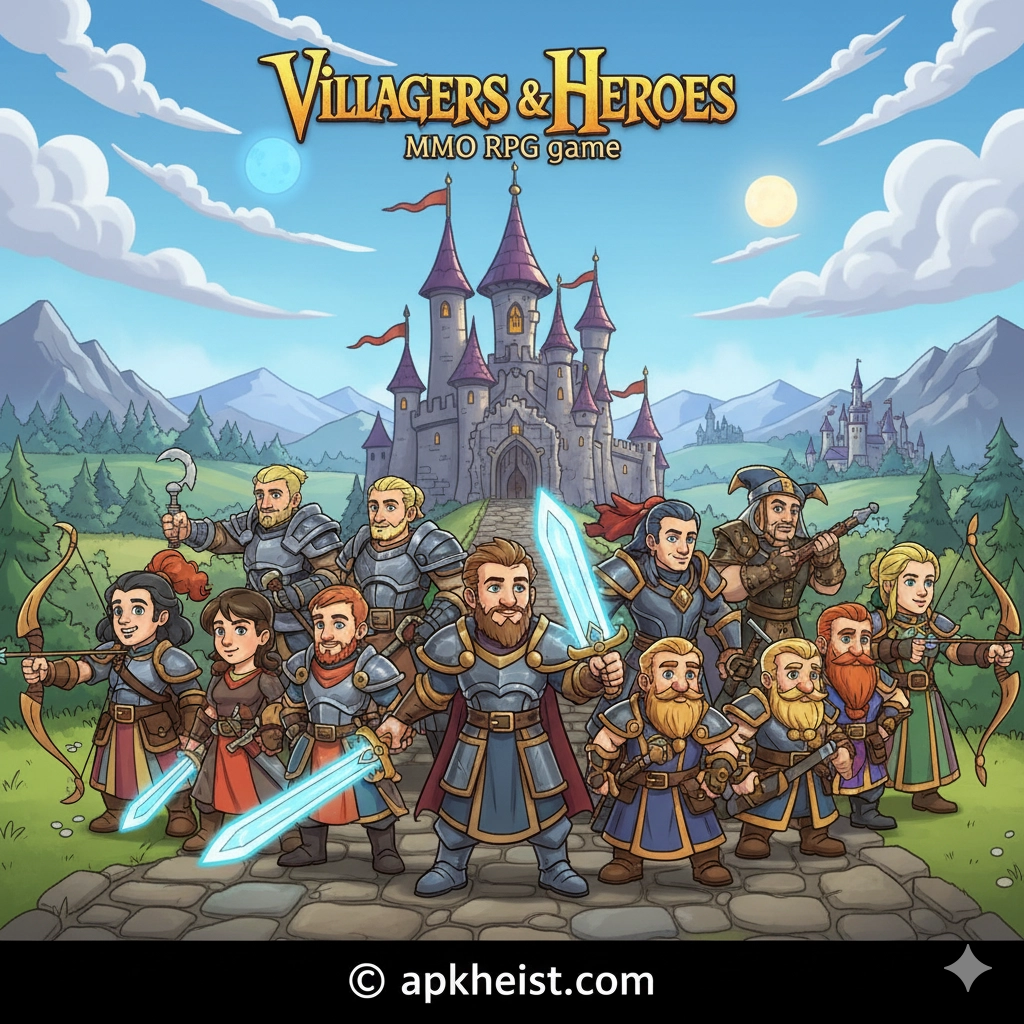
Large intro: Whether you prefer crafting, farming, trade, or joining raids, Villagers & Heroes provides a flexible sandbox inside a persistent online world. Players choose roles, develop professions, and collaborate in community-driven economies while participating in combat and quest content. Below you will find a structured overview (table of contents), deep-dive sections for each major topic, and a set of FAQs addressing common questions. Throughout the article, related resources and site links are naturally integrated for further reading and comparative context.
Column introduction: The sections that follow are arranged to guide you from onboarding and early choices through midgame systems and advanced strategies. Read the Table of Contents to jump to topics most relevant to your playstyle.
1. Getting Started — Character Creation & First Steps — Quick orientation, initial choices, and the best early-game priorities.
2. Professions & Economy — Crafting, Farming, and Trade — How to pick professions and build a reliable income stream.
3. Combat & Party Play — Roles, Builds, and Raids — Practical combat roles, party synergy, and raid preparation.
4. Village Management — Upgrades, NPCs, and Community Hubs — Running and benefiting from village systems and player hubs.
5. Gear Progression & Enhancement — Priorities for gear, enchantments, and long-term advancement.
6. Daily Routines & Time Management — Effective daily habits to maximize progression without burnout.
7. Social Systems & Endgame Content — Guilds, trading, seasonal events, and endgame goals.
MP Saara App: The Intelligent Personal
1. Getting Started — Character Creation & First Steps
Begin by selecting a race and initial vocation that fits your intended long-term playstyle. Early choices matter for convenience but are not permanently limiting — Villagers & Heroes provides respec and retraining opportunities later. Prioritize these first steps: complete the tutorial quests to unlock basic crafting and teleportation; pick a primary profession (gathering or crafting) to stabilize income; and join a low-pressure guild for social support and mentoring.
When creating your character, consider whether you value early combat power or long-term economic strength. Combat-oriented vocations grant faster leveling through questing, while crafting/farming vocations give steady resources and market leverage. Your very first hour should focus on obtaining a basic mount or mobility upgrade, unlocking a safe housing plot (if available), and setting up a crafting queue for essential consumables that will speed quest completion.
Hustle Castle Game — Complete Guide
2. Professions & Economy — Crafting, Farming, and Trade
Professions are a core pillar of Villagers & Heroes’ gameplay loop. You will typically choose a gathering profession (e.g., mining, logging, herbalism) and a complementary crafting profession (e.g., blacksmithing, alchemy, tailoring). A balanced approach is to pair one efficient gatherer with one high-demand crafter — for example, herbalism + alchemy supplies potions that almost every player needs.
Key economic tips: keep a rolling stock of high-demand consumables, monitor the player market for price swings, and use bulk-gathering events to accumulate rare components. Early investment in storage and transport (e.g., trade packs or pack animals) pays dividends. Consider offering crafting services or commissioned items to guildmates for a steady income stream rather than relying solely on open-market sales.

3. Combat & Party Play — Roles, Builds, and Raids
Combat in Villagers & Heroes emphasizes distinct roles: tank, healer, and one or more damage-dealers (DPS). Effective party play hinges on clear role definition and accessible consumables. Build choices should align with group needs — for example, a hybrid build can be useful in small-group PvE, while specialized builds dominate high-end raids.
Build advice: optimize a primary skill rotation, cap your secondary stats (crit, penetration, defense) to recommended thresholds, and always bring group utility (buffs, debuffs, crowd control). Before attempting raid content, coordinate consumable supplies with your party, test mechanics in smaller dungeons, and practice encounter timing. Good communication and role discipline reduce wipe rates dramatically.
MedarotS — The Ultimate Robot Battle
4. Village Management — Upgrades, NPCs, and Community Hubs
Villages act as micro-economies and social centers. Building upgrades unlock NPC services, new crafting stations, and passive buffs. Prioritize communal structures that benefit many players: marketplaces, shared workshops, and transport nodes. Village governance—if present—can determine taxes or resource access, so participate in local decision-making to align outcomes with your goals.
Practical village strategy: collaborate with neighbors to optimize workshop specialization (e.g., one house focuses on leatherworking while another handles potions), rotate guild-held crafting queues to maximize uptime, and schedule community events that attract buyers and new members. Well-managed villages create multiplier effects—higher turnout during events, more consistent market demand, and easier recruitment for raids.
Habitify — Master Your Routines with
5. Gear Progression & Enhancement
Gear progression in Villagers & Heroes often follows a tiered path: quest gear → crafted gear → dungeon drops → raid/mythic gear. Prioritize upgrades that fill gaps in your performance metrics rather than chasing marginal stat gains. Enhancements and enchantments are valuable but often require rare materials; spend these on your primary set, not experimental side-sets.
Enhancement rules of thumb: always cap your primary defensive/offensive stat for the content you run; maintain at least one alternative gear set for situational encounters; and invest in repairs and consumables so that your effective uptime in content is maximized. If gear is tradeable, keep a watch on the market for bargains—players undercutting due to time pressure present buy opportunities.
6. Daily Routines & Time Management
Efficient daily routines make steady progress without overwhelming play sessions. A strong routine includes: daily quests and repeatables, profession work orders, a short dungeon/raid run, market checks, and social check-ins with your guild. Use checklists to avoid wasting time on low-value tasks.
Suggested daily plan (30–60 minutes): 1) Complete daily quest hub for XP and reputation, 2) Run queued crafting/gathering tasks, 3) Do one targeted dungeon run for gear or materials, 4) Post high-value items on the market and remove unsold items, 5) Coordinate next session with guildmates. This pacing yields continual progression while leaving energy for special events.
Call Of Courage: Relive World War II in an
7. Social Systems & Endgame Content
Endgame content centers on coordinated group activities: high-tier raids, competitive events, and seasonal challenges. Social systems—guilds, trade networks, and mentorship programs—are crucial for sustained success. Choose a guild that matches your activity level and goals: some focus on casual progression, others on world-first or speed-clear records.
Endgame checklist: optimize your best-in-slot gear, specialize into a raid role, maintain a stable roster of consumables, and participate in pre-raid practices to refine mechanics. For long-term satisfaction, alternate between progression pushes and social or economic objectives to avoid burnout.
Angry Bull Attack — Ultimate Guide to the
Frequently Asked Questions (FAQs)
Q1: Is Villagers & Heroes free-to-play and are there pay-to-win elements?
A1: The game is free-to-play with optional microtransactions. Most pay elements are convenience or cosmetic (e.g., boosts, mounts, housing decorations). True pay-to-win depends on the server economy—on some servers, real-money purchases can accelerate progression via time-saved consumables, but skill and teamwork remain decisive in high-end content.
Q2: Which professions are best for solo players?
A2: Solo players often benefit from gathering professions (herbalism, mining, logging) paired with a crafting profession that turns raw materials into consumables (alchemy, provisioning). This combination provides self-sufficiency and a marketable product to earn in-game currency from other players.
Q3: How do I find a good guild?
A3: Look for guilds with clear activity schedules and recruitment posts that match your timezone and playstyle. Join their public chat or Discord, ask about raid requirements and culture, and attend a few events as a trial. A supportive guild that values communication and mentorship is more valuable than a top-performing but unwelcoming one.
Q4: What are the best ways to make in-game currency early on?
A4: Efficient money-making strategies include farming high-demand crafting materials during off-peak hours, producing consumables (potions, repair kits), flipping underpriced market items, and completing repeatable quests that reward tradeable goods. Focus on commodities with stable demand.
Q5: Should I focus on PvE or PvP content first?
A5: Begin with PvE to learn mechanics, build a reliable gear baseline, and gather resources. Transition to PvP once you have a solid build and consumable reserves. Many players alternate to keep gameplay varied; doing both increases overall mastery and market value.
Q6: How important is housing and village ownership?
A6: Housing and village involvement provide long-term economic and social benefits—passive crafting stations, storage, and community events. While not mandatory, owning or contributing to a well-run village amplifies progression and social connections.
Q7: What are common mistakes new players make?
A7: Common mistakes include: hoarding low-value materials without checking the market, ignoring profession synergies, attempting high-tier content without consumables or coordination, and changing build specializations too frequently. Avoid these by planning a 7–14 day progression goal and checking market demand before investing heavily in one commodity.
MARVEL Puzzle Quest: Match RPG Game
Closing note: Villagers & Heroes rewards patient planning, social collaboration, and a diversified approach to progression. Use the sections above as a roadmap: start with a stable daily routine, align professions with the market, and engage with a guild that supports your goals. Good luck, and may your village prosper.