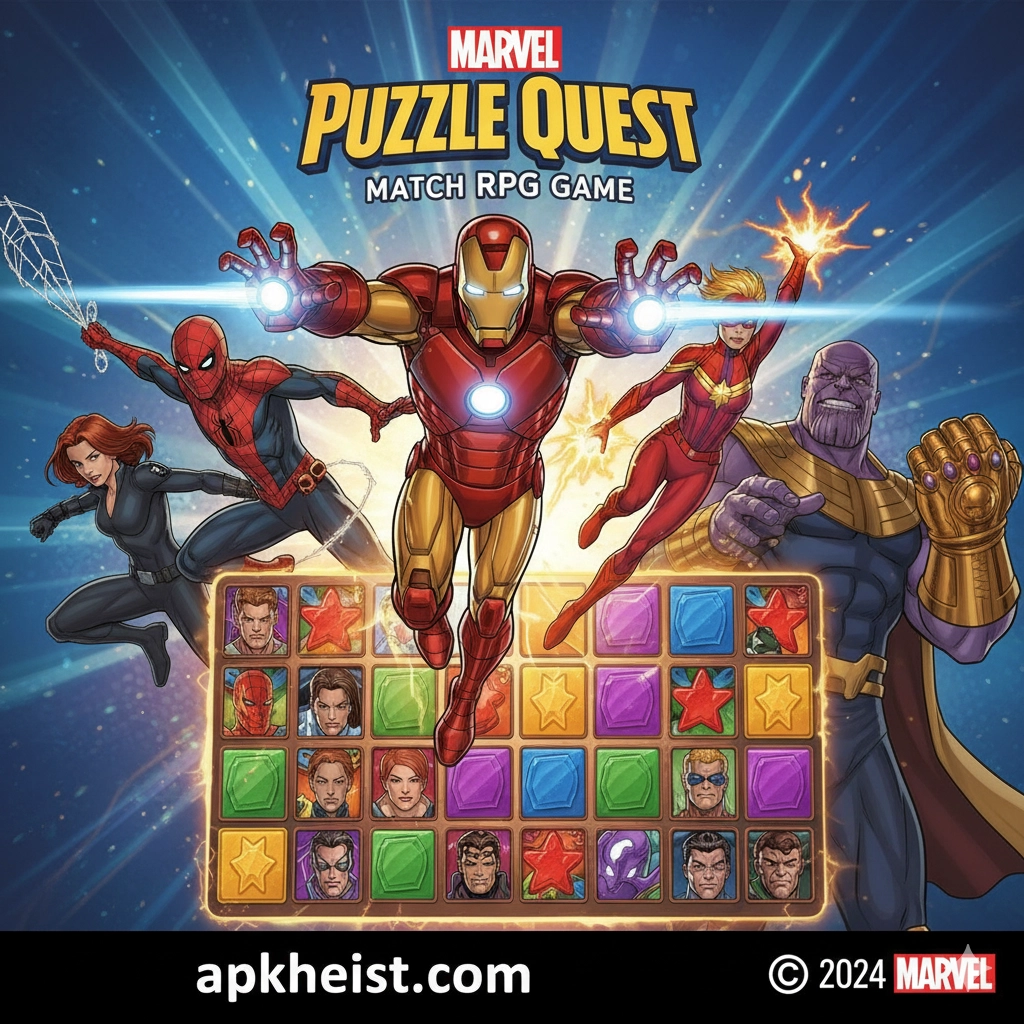
Long intro: MARVEL Puzzle Quest: Match RPG Game is a hybrid experience where match-3 combat powers iconic Marvel heroes and villains. Players collect characters, level them up, assemble synergistic teams, and deploy unique abilities triggered by matching tiles. Whether you enjoy single-player story campaigns, competitive PvP, or time-limited events, the game rewards strategic planning as much as tile-matching skill. Along the way you’ll encounter resource management choices, gear upgrades, and roster-building tradeoffs that shape long-term success. For related tools and reading, you might find resources like How Does the Motion: Tasks & AI Schedu and the Discover the Power of GP Chat AI article useful for general productivity and planning while you grind.
1. Gameplay Overview — Quick summary: Core loop, match-3 combat, and mission types.
2. Characters & Roster — Quick summary: Rarity, roles, and roster prioritization.
3. Match Mechanics & Combos — Quick summary: Tile types, cascades, and charge economy.
4. Team Building & Synergy — Quick summary: Composition, leader abilities, and counters.
5. Progression Systems — Quick summary: Leveling, gear, ISO, skill upgrades.
6. Events & PvP — Quick summary: Event modes, seasonal rewards, and arena tactics.
7. Monetization & Practical Tips — Quick summary: When to spend, resource prioritization, and long-term planning.
1. Gameplay Overview
MARVEL Puzzle Quest’s gameplay loop centers on match-3 battles where each match generates power for characters, triggers abilities, and causes direct damage or status effects. A single encounter typically lasts several rounds: you match tiles to fill ability meters, activate abilities (which can buff allies, debuff opponents, or change the board), and react to enemy moves. Missions vary—campaign nodes, challenge maps, story chapters, and daily objectives—each designed to test different aspects of your roster. The pacing rewards both short, tactical decisions (which match to make now) and longer strategic planning (which characters to invest in). If you manage your energy and resources efficiently, you’ll steadily expand your options for harder content.
2. Characters & Roster
Characters are the backbone of your strategy. Each hero or villain has a rarity tier, signature abilities, and a role such as damage dealer, controller, or support. Building a competitive roster starts with identifying core pieces: a reliable damage dealer, a control/utility piece (stun, stun resist, taunt, etc.), and a support/buffer. Rarity dictates base power and upgrade ceilings, but synergy often outperforms raw rarity—two mid-tier characters with complementary abilities can outshine a single top-tier unit in many nodes. Prioritize leveling characters that unlock new playstyles or fill gaps in your team. Use gear and ISO upgrades to shore up weaknesses: ISO for stat boosts and gear for specific bonuses. For roster planning and meta-awareness, consult community resources and occasional developer notes; peripheral productivity and planning articles such as What Makes the STELCO App an Essential can help you schedule farming sessions and track progress.
3. Match Mechanics & Combos
Understanding the tile ecosystem is essential. Typical tiles include basic color tiles that correspond to hero abilities, special tiles generated by abilities (bombs, lock tiles, or enhancers), and cascade mechanics that produce extra matches after tiles fall. Combos form when cascading matches or when special tiles trigger area effects. Timing ability casts is critical—some abilities are best used immediately to interrupt an enemy prepped for a big move, while others should be stacked to coincide with a power surge from matching. Board control also matters: certain abilities can convert tile colors or spawn tiles to feed specific characters. Learn to prioritize matches that charge your key abilities first; sometimes leaving a seemingly good match unmade creates better future opportunities. For broader software and tooling context while planning sessions, see practical references like Discover the Power of BLOApp App.

4. Team Building & Synergy
Team-building is the exercise of combining characters whose abilities amplify one another. Start with a clear win condition—do you want to out-sustain opponents, burst them down, or control the board? Select a leader or anchor whose passive or leadership bonus supports that condition. Fill remaining slots with characters that either enable the anchor’s plan (e.g., tile generators for a burst dealer) or cover its vulnerabilities (e.g., a high-resist support if your anchor is vulnerable to status effects). Consider counterplay: teams with strong single-target damage struggle against enemy teams with high defenses or heals; conversely, area-damage teams falter against concentrated single-target burst. Rotation matters—rotate characters in and out of active use based on event restrictions and enemy matchups. Over time, cultivate a few flexible teams so you can adapt to event modifiers without repeatedly re-investing resources.
5. Progression Systems
Progression is multi-layered: character levels, star/rarity promotion, gear/iso upgrades, and ability skill ranks. Experience and promotion materials are often gated by campaign or event requirements, so farming efficiency is crucial. Decide a short-term and long-term investment plan: short-term, level a handful of characters to tackle current content; long-term, slowly promote one or two anchor characters to higher tiers. Gear often provides stat multipliers and can dramatically alter a character’s performance; prioritize gear that complements role (offensive stats for damage dealers, survivability for tanks). Skill upgrades usually yield diminishing returns; invest in skills that meaningfully change playstyle or unlock synergy. Save premium currency for limited banners or essential roster slots unless you’re comfortable with microtransactions. For optimization of your time and resource scheduling, tools like the PDF Viewer & Book Reader App guide can help you manage walkthroughs and notes while farming. See PDF Viewer & Book Reader App for managing guides.
6. Events & PvP
Events are a major source of unique characters, promotion materials, and currency. They are usually time-limited and come in several flavors: solo challenge events, alliance/coalition events, and arena-style PvP. The key to maximizing event value is preparation: maintain a roster of characters you can swap into events with minimal additional investment, understand event-specific rules (tile limitations, ability cooldowns, or forced roles), and plan farming routes for necessary materials. In PvP, prediction and counterbuilding matter. Anticipate common meta choices and craft counters—if a meta relies heavily on heavy AOE, bring sustain and single-target burst. Arena play rewards consistency and breadth of roster more than single play peaks; diversify your team options so you can adapt when opponents change. If you track event schedules or need to coordinate sessions, developer-side or scheduling tools like Chrome Canary (Unstable) App or calendar apps may assist in planning play windows around limited-time rewards.
7. Monetization & Practical Tips
The game’s monetization model includes optional purchases for premium currency, bundle offers, and sometimes limited banners for characters. Spend strategy should align with objectives: don’t chase every limited character unless they fill a critical gap; instead, save for transfers or bundles that deliver long-term value. Practical tips include: (1) prioritize resources for characters that unlock new content, (2) focus on gear/skill upgrades that immediately improve your main team, (3) participate in daily objectives for steady resource flow, and (4) avoid impulsive spending during emotionally driven sessions—plan purchases. For players balancing play with a busy schedule, productivity and scheduling articles such as How Can the Caho Calendar-Schedule Plan may help you structure short, effective play sessions that maximize daily rewards. Lastly, maintain a small reserve of premium currency for rare, high-impact opportunities.
FAQ 1 — What platforms is MARVEL Puzzle Quest available on?
Answer: MARVEL Puzzle Quest is primarily available on mobile platforms (iOS and Android) and also has versions that run on certain PC storefronts. Availability may change by region or platform; check your device’s app store for the latest listing.
FAQ 2 — How should I prioritize upgrades for new characters?
Answer: Immediately prioritize leveling to unlock abilities and then focus on upgrading the character’s most impactful ability first. Promote or gear the character only if they fill a persistent role in one of your core teams. Preserve promotion materials for characters you will use long-term.
FAQ 3 — Are there “must-have” characters for endgame content?
Answer: The meta evolves, and while some characters historically stand out due to unique mechanics, the game rewards creative synergy. Instead of chasing a single “must-have,” build versatile teams and adapt to event mechanics. Community meta guides can help identify current top choices.
FAQ 4 — How do I earn premium currency without spending real money?
Answer: Premium currency is often awarded through daily login bonuses, event milestones, and achievement rewards. Participate consistently in events and complete daily and weekly objectives to accumulate free currency over time.
FAQ 5 — What’s the best way to learn advanced board management?
Answer: Practice focusing on future turns—identify matches that set up cascades and charge priority abilities. Review replays (if available) or consult community guides. Time-block short practice sessions focused solely on matching decisions to improve pattern recognition.
FAQ 6 — How should I approach PvP matchmaking and ranking?
Answer: Treat PvP as a test of roster depth and adaptability. Build counter teams against common metas, rotate lineups to keep opponents guessing, and keep a steady improvement plan rather than chasing short-term rank spikes. Use arena rewards to bolster mid-tier roster pieces.
FAQ 7 — Any final tips for long-term enjoyment?
Answer: Set small, measurable goals (level a character, finish an event tier), diversify your teams, and avoid burnout by alternating between competitive and casual play. Use external planning and note-taking tools to track progress, and join community groups for co-learning and strategy exchange. For categories and related games, explore genres like Adventure and Puzzle to discover similar titles and keep your gameplay fresh.