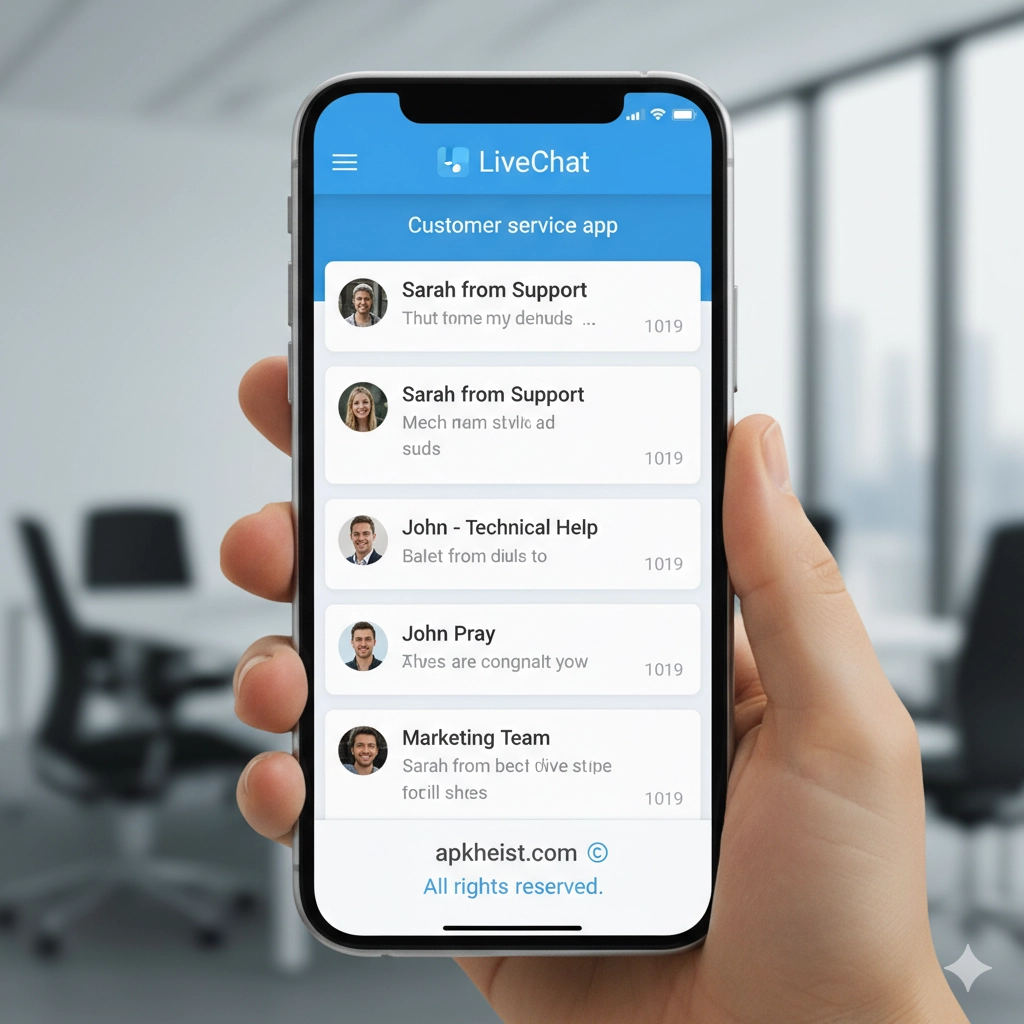
Long introduction: LiveChat is a purpose-built customer service app that combines real-time live chat, ticketing, analytics, and integrations into a single platform. Organizations use LiveChat to reduce response times, capture leads directly from website conversations, and route complex issues into support queues. The platform supports automation through chatbots, canned responses, and third-party integrations (CRMs, e-commerce platforms, and help desk software), allowing teams to scale support without sacrificing personalization. In this article we break down the core capabilities, implementation best practices, common use cases, and measurable KPIs to help you decide if LiveChat is the right fit for your customer service strategy.
Contents:
1. Real-time chat — The core capability: fast, synchronous conversations with visitors.
2. Chatbots and automation — Reduce agent load with rules, bot flows, and autoresponders.
3. Omnichannel routing — Combine web chat, social, and messaging into unified queues.
4. Integrations and API — Connect LiveChat to CRM, e-commerce, analytics, and custom systems.
5. Reporting and analytics — Measure response time, satisfaction, and conversion impact.
6. Security & compliance — Data handling, encryption, and controls for regulated environments.
7. Implementation best practices — Onboarding, staffing, SLAs, and optimization tips.
Firefox Nightly App: The Cutting-Edge
1. Real-time chat
Real-time chat is LiveChat’s foundational feature. It provides instant, text-based conversations between website visitors and your support or sales agents. The interface is designed to be lightweight for visitors and feature-rich for agents: agents see visitor context (page, referrer, previous chats), can share files, transfer chats, and escalate to a ticket when necessary.
From a business perspective, the major benefits are reduced resolution time and increased opportunity capture. When an agent can answer product questions instantly, visitors convert at higher rates than when forced into asynchronous channels. LiveChat supports proactive chat invitations, enabling agents to engage visitors based on behavior signals (time on page, viewed products), which often produces significant lifts in lead capture and average order value.
Is the Spacedesk App the Ultimate Multi
2. Chatbots and automation
Automation reduces repetitive workloads and routes routine requests without agent involvement. LiveChat supports rule-based bots and AI-assisted responders that can qualify leads, answer FAQs, provide order status, and capture contact information for follow up. Well-designed bot flows should escalate to a human agent when intent confidence is low or when the conversation moves to purchasing or sensitive tasks.
Successful deployments use a hybrid approach: bots handle 40–60% of incoming volume while human agents handle complex, high-value, or emotional interactions. Key configuration elements include fallback prompts, handover triggers, and clear disclosure when users are chatting with an automated system to preserve trust and compliance.
Share Cool Emoji Arts Designs App
3. Omnichannel routing
Modern customers expect support over multiple channels: website chat, Facebook Messenger, WhatsApp, and email. LiveChat consolidates those channels into a single agent workspace, enabling seamless conversation history and consistent service levels. Agents avoid tool switching and supervisors gain a unified view of workload and SLAs.
Routing logic can be based on skill, language, customer priority, or channel. For example, high-value customers can be routed to senior agents, while social messages follow a different SLA. The unified history also improves context so handoffs between channels remain coherent and customers do not repeat themselves.
Rhymit App — The Writer’s Fast Rhymin
4. Integrations and API
LiveChat’s extensible API and prebuilt integrations are essential for embedding chat into business workflows. Common integrations include CRMs (to log chat transcripts and update contact records), e-commerce platforms (to show order info to agents), and knowledge bases (to surface relevant articles during a conversation). The API also allows custom automations such as creating support tickets, syncing user attributes, or feeding conversations into analytics pipelines.
When integrating, prioritize data mapping and consent handling: ensure identifiers match across systems, and that privacy preferences and opt-outs are respected. Automation should enrich your systems of record rather than create fragmented data silos.
B.o.T Game — Tactical Odyssey in a Broke

5. Reporting and analytics
Reporting turns chat activity into actionable KPIs: response time, first reply time, chat concurrency, customer satisfaction (CSAT), resolution rate, and conversion uplift. LiveChat provides dashboards that surface trends and agent performance. Advanced teams export chat metadata for cohort analysis, funnel attribution, and revenue impact modeling.
Use analytics to answer questions like: Which pages generate the most support demand? Which chat prompts drive conversion? Are bot interventions reducing handle time without harming satisfaction? Regularly review these metrics and run A/B tests (for example, proactive invite wording or agent templates) to optimize impact.
Sugar Rush — A Quick Adventure Game
6. Security & compliance
Security and compliance are non-negotiable for businesses operating in regulated industries. LiveChat supports secure data transit (TLS), role-based access controls, and options for data retention policies. For organizations handling personal data, ensure chat transcripts are stored according to retention rules and that access is logged and auditable.
When operating globally, confirm that LiveChat’s data processing practices align with applicable regulations (for example, GDPR) and that subprocessors are disclosed. Implement privacy notices in chat widgets and collect consent for data processing where required.
Gun Strike Game — The Complete Playe
7. Implementation best practices
Adopt a staged rollout to minimize disruption: start with a pilot on a low-risk high-traffic page, collect feedback, and iterate on bot scripts, routing rules, and agent training. Define clear SLAs and staffing plans to cover peak hours. Document escalation paths and standard operating procedures for common scenarios (returns, refunds, technical troubleshooting).
Train agents not only on product knowledge but also on chat etiquette: concise messaging, using canned responses judiciously, and closing chats with clear next steps. Continuously monitor CSAT and agent workloads to reallocate resources and prevent burnout.
Epic Heroes War Game: The Complete
FAQs — LiveChat (Common questions and answers)
Q1: What is LiveChat and who should use it?
A: LiveChat is a customer service platform for real-time support, sales conversations, and ticketing. It suits e-commerce retailers, SaaS vendors, and service organizations that need fast response times, conversational lead capture, and integrated support workflows.
Q2: How does LiveChat differ from basic chat widgets?
A: Beyond a widget, LiveChat offers agent workspaces, omnichannel routing, automation (bots), reporting, and integrations with CRMs and commerce platforms. Its features are designed for enterprise workflows and measurable business outcomes rather than one-off visitor messaging.
Q3: Can LiveChat handle high chat volumes and peak traffic?
A: Yes—scalability is addressed through automation (bots), work distribution (routing and skill-based queues), and concurrency controls. Capacity planning and staged rollouts help ensure adequate staffing during peaks.
Q4: Is LiveChat secure for handling payment details or PII?
A: LiveChat supports secure transmission and configurable retention policies, but best practice is to avoid collecting full payment data directly in chat. Instead, use secure links to payment pages and ensure transcripts are stored according to your compliance requirements.
Q5: How do I measure the ROI of LiveChat?
A: Measure ROI by tracking conversion uplift attributable to chat sessions, average order value for customers who engaged in chat, reduction in phone/email handling time, and improvements in CSAT. Use UTM and conversion tagging to attribute revenue to chat interactions.
Q6: What integrations are most valuable with LiveChat?
A: CRMs for lead capture, e-commerce platforms for order context, help desk systems for ticket escalation, and analytics tools for attribution. The most valuable integrations are those that reduce manual lookups and provide agents with immediate customer context.
Q7: What are common pitfalls when implementing LiveChat?
A: Common mistakes include poor bot design (leading to frustrated visitors), understaffing (slow response times), lack of integration with backend systems (forcing manual lookups), and failing to set SLAs. Address these by piloting, monitoring KPIs, and iterating on scripts and staffing.
Soul Knight Game: The Ultimate Guide to