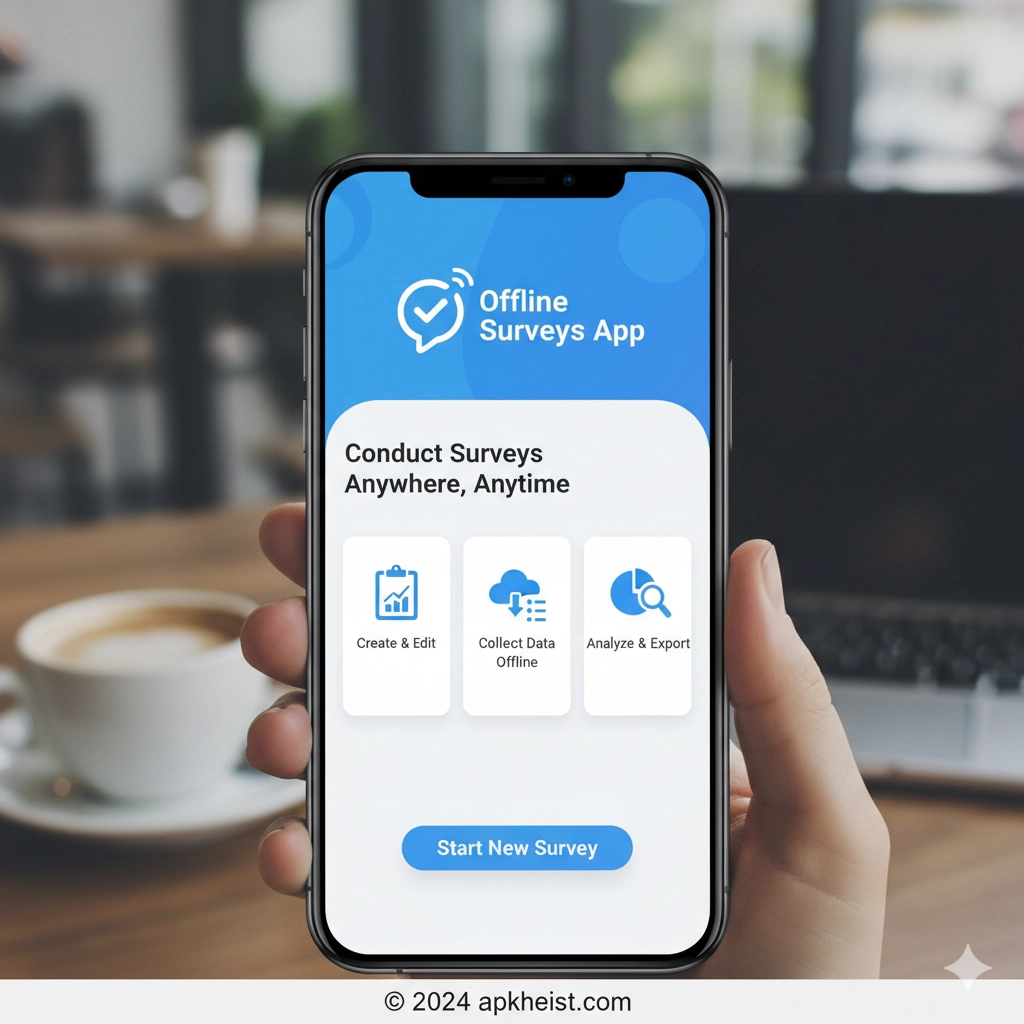
An Offline Surveys App is designed for field research, market analysis, academic studies, humanitarian missions, and enterprise data collection in remote or low-bandwidth environments. Unlike traditional cloud-dependent survey tools, offline-capable systems allow enumerators to capture responses locally on mobile devices and synchronize them securely once connectivity is restored. This architecture ensures operational continuity, minimizes data loss, and enhances productivity across industries such as healthcare, logistics, retail audits, agriculture, and government census operations.
1. What Is an Offline Surveys App? – Understanding its core architecture and purpose.
2. Key Features of Offline Survey Technology – Functional capabilities that differentiate robust platforms.
3. Benefits for Field Data Collection – Why offline-first systems outperform web-only tools.
4. Security and Data Integrity Considerations – Protecting sensitive survey information.
5. Real-World Use Cases and Industries – Where offline survey apps deliver measurable value.
1. What Is an Offline Surveys App?
An Offline Surveys App is a mobile or tablet-based application engineered to collect, store, and validate survey responses without requiring continuous internet access. It uses local device storage to temporarily retain structured datasets. Once connectivity becomes available, the application performs secure synchronization with a centralized database. This offline-first design pattern is particularly critical for rural regions, construction sites, disaster recovery zones, or international research deployments where network infrastructure is unreliable. By decoupling data capture from real-time connectivity, organizations maintain uninterrupted workflow and operational efficiency.
2. Key Features of Offline Survey Technology
Advanced Offline Surveys App platforms typically include dynamic form builders, conditional logic, skip patterns, multimedia capture (images, audio, GPS), digital signatures, and encryption protocols. Many systems support validation rules to prevent incomplete or inconsistent entries. Some platforms also integrate analytics dashboards and export functionality for CSV or API-based integrations. These features allow field teams to collect high-fidelity datasets comparable to centralized online systems. For professionals exploring digital tools beyond surveys, platforms like Tools and Productivity categories showcase related mobile utilities that enhance workflow automation.
3. Benefits for Field Data Collection
The primary advantage of an Offline Surveys App is resilience. Field agents can operate autonomously without worrying about network disruptions. This reduces respondent wait time, increases daily completion rates, and lowers operational costs associated with connectivity issues. Additionally, offline survey solutions improve data accuracy by enabling real-time validation rules at the point of entry. In sectors such as Education and Health & Fitness, where accurate field data is mission-critical, offline capability ensures research continuity and compliance standards.
4. Security and Data Integrity Considerations
Security architecture is fundamental when deploying an Offline Surveys App. Local encryption (AES-256), secure authentication, device-level access controls, and encrypted synchronization channels protect respondent data. Many enterprise-grade systems include role-based permissions and audit logs to maintain governance compliance. Data integrity mechanisms such as timestamping, GPS tagging, and checksum verification further enhance dataset reliability. Organizations handling regulated information should ensure alignment with international data protection standards before deployment.

5. Real-World Use Cases and Industries
Offline survey applications are widely implemented in humanitarian aid assessments, retail store audits, agricultural yield monitoring, census operations, academic research, and logistics inspections. NGOs conducting field research in remote territories depend heavily on offline functionality to maintain continuous documentation. Businesses operating across Business and Travel & Local environments use offline data capture to optimize reporting cycles. As digital transformation expands globally, offline-enabled survey tools remain essential components of enterprise mobility strategies.
Frequently Asked Questions (FAQ)
What happens to data collected while offline?
All responses are securely stored on the device using encrypted local storage. Once internet access is restored, the application synchronizes the stored records with the central server automatically or manually, depending on configuration.
Can multimedia files be captured offline?
Yes. Most Offline Surveys App platforms allow image capture, audio recording, barcode scanning, and GPS location tagging without internet connectivity. These files are queued and uploaded during synchronization.
Is an Offline Surveys App suitable for large-scale research projects?
Absolutely. Offline-first architecture is ideal for large census initiatives, market research studies, and field audits. It ensures consistent data collection across geographically dispersed teams.
How secure is offline survey data?
Security depends on implementation. Enterprise-grade applications employ encryption, secure authentication, and role-based access control to prevent unauthorized access and maintain compliance standards.
Can offline surveys integrate with analytics platforms?
Yes. After synchronization, data can be exported in structured formats such as CSV or accessed via API integrations for reporting, BI dashboards, or advanced analytics systems.