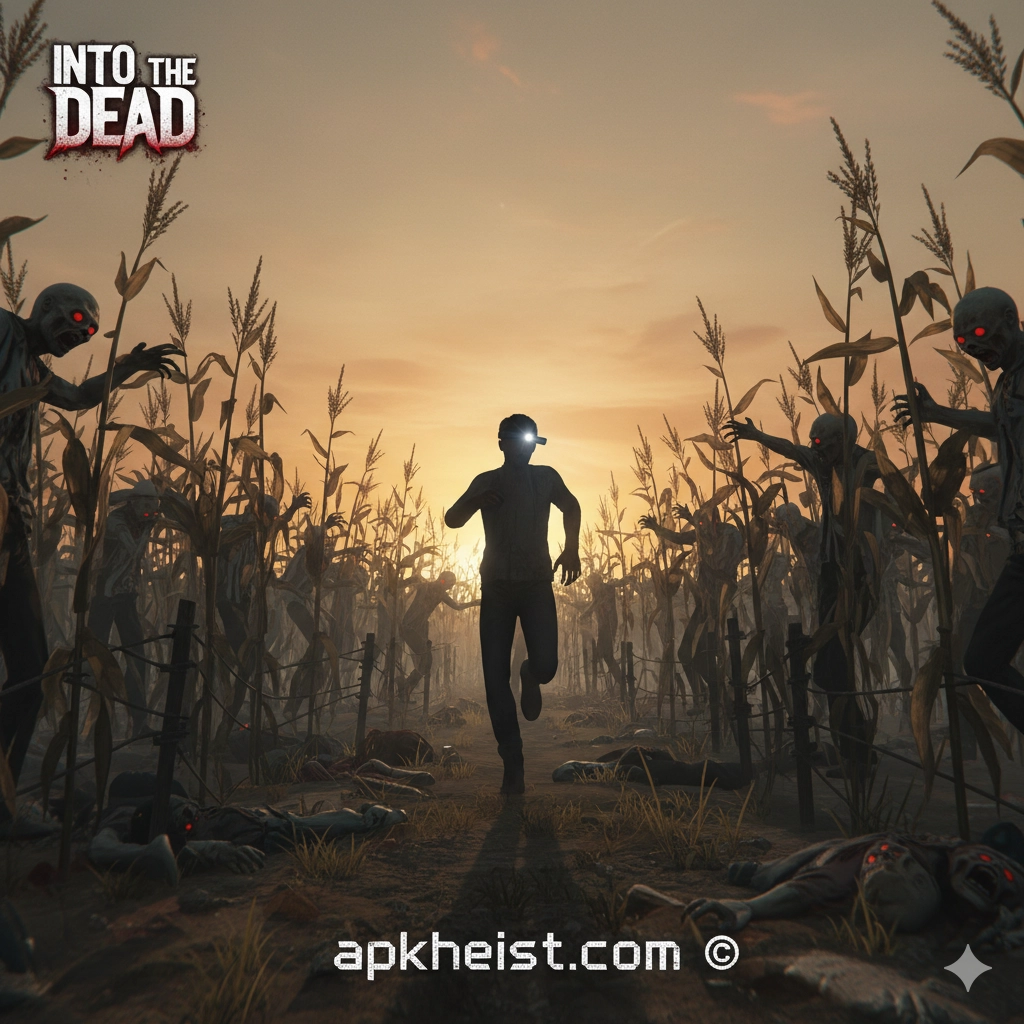
Full overview: Since its debut, Into the Dead has blended cinematic atmosphere with mobile-friendly controls to deliver tense, replayable runs. Players navigate linear corridors and open fields while zombies close in from both sides. Success depends on split-second decisions: when to dodge, when to use a limited melee or firearm, which perks to unlock, and how to invest in permanent upgrades. This article breaks the game into key topics — from basics and progression to niche strategies and community tips — and answers frequently asked questions so you can improve immediately.
1. Core gameplay loop — short description: How runs are structured, objective types, and scoring.
2. Movement & controls — short description: Best practices for dodging, sprinting, and managing obstacles.
3. Weapons & loadouts — short description: Choosing firearms, melee items, and consumables for different runs.
4. Progression & upgrades — short description: Persistent upgrades, skill trees, and resource management.
5. Advanced strategies & challenges — short description: Endgame tactics, event modes, and maximizing high scores.
1. Core gameplay loop
Gameplay structure. Each run in Into the Dead places the player on a pre-set route filled with hordes, environmental hazards, and occasional scripted moments (vehicle escape sequences, timed chokepoints). Objectives vary by mode: survive for a distance/time, rescue NPCs, reach an extraction point, or complete mission-specific goals. The core loop is simple: start a run, use movement and weapons to avoid being overwhelmed, and end with a score that grants currency/experience.
Modes and variety. The game typically offers multiple modes — classic endless runs, story missions with checkpoints, timed events, and special challenge levels that rotate weekly. Each mode tweaks risk vs. reward: endless gives scoring and leaderboard placement; missions reward progression materials. Understanding the mode you play is critical to choosing the correct loadout and tactics.
Resource economy. Runs award in-run pickups (ammo, temporary boosts) and end-run rewards (credits, upgrade parts). Balancing when to burn consumables versus saving them for harder segments is a recurring strategic decision. Use short runs to farm specific materials and longer runs for experience and challenge completion.
2. Movement & controls
Basic controls and ergonomics. Movement in Into the Dead is simplified for mobile: swipe or tilt to move laterally, tap to use items, and a dedicated action for special maneuvers (barrel roll, slide, or melee depending on version). Mastering sensitivity and swipe precision immediately reduces accidental hits; spend time in lower-difficulty runs to calibrate your preferred input settings.
Situational movement. Prioritize lateral dodges to avoid large clusters; vertical dodges (slides/jumps) are for low obstacles and scripted traps. When a narrow chokepoint appears, slow your inputs slightly — micro-adjustments let you thread between tight groups instead of panicking into them. In levels with vehicles or destructible cover, use the environment: momentarily sprinting toward cover can buy time to reload or apply a heal.
Risk management. Aggressive movement (running toward zombies to sweep them with melee) yields higher score multipliers but increases the chance of mistake. Conservative play is better for objectives requiring survival to a checkpoint. Alternate your style depending on goals: high-score runs vs. material farming runs demand different movement risk tolerance.
3. Weapons & loadouts
Weapon categories. Typical equipment divides into melee (knife, machete, bat), short-range firearms (shotguns, SMGs), and long-range rifles. Melee offers ammo-free reliability but risks close contact. Firearms deal more damage at range but consume scarce ammunition. Balancing these options is essential: many players equip a reliable melee for crowd control and a firearm to handle high-threat targets or special infected.
Choosing a loadout. Match loadout to mode: for speed-run leaderboards, light weapons and mobility boosts are ideal; for mission objectives requiring enemy takedowns, heavier firearms and armor are preferable. Attachments and perks (critical chance, reload speed, headshot multiplier) compound effectiveness — prioritize upgrades that address your weakest moments (e.g., low ammo or slow reloads).
Consumables and special items. Use consumables strategically: a temporary damage amp during a boss segment can mean the difference between success and restart. Items like a flare or decoy may attract or distract zombies, creating breathing room. Save high-value consumables for objective-critical segments, not routine encounters.

4. Progression & upgrades
Permanent upgrades. The game usually includes a persistent upgrade tree: player health, weapon damage, ammo capacity, and passive perks. Invest early in quality-of-life upgrades (stamina, reload speed) to make each run safer and more profitable. Weapon-leveling often provides larger power jumps than purely cosmetic upgrades.
Upgrade economy and planning. Upgrade resources are finite; avoid leveling every item simultaneously. Instead, focus on a primary weapon and complementary passive perks, then diversify once you can reliably complete higher-difficulty missions. Participate in timed events to acquire rare upgrade materials faster.
Seasonal and event rewards. Many versions of the game include seasonal passes or event-specific unlocks that grant powerful items or unique skins. Evaluate seasonal purchases against long-term value: temporary boosts that speed short-term progress may be worth it if you’re aiming for event-exclusive rewards.
5. Advanced strategies & challenges
Endgame tactics. At higher difficulties, enemy density and special infected scale sharply. Use choke management: funnel zombies into narrow corridors where melee and area-of-effect weapons excel. Learning spawn patterns for a given map helps you predict when a wave will arrive and position yourself accordingly.
Maximizing score. Score multipliers come from consecutive kills, headshots, and completing objectives without using revives. Plan runs to chain these opportunities: equip weapons that reward precision and practice routes that yield frequent headshot opportunities. Nitro or adrenaline boosts during high-density sections can maintain combo streaks.
Community tactics and meta. Competitive players share route optimizations and loadout combos; studying community leaderboards reveals which weapons and perks are favored at the top. Emulate successful runs, then iterate: small adjustments to timing or gear often produce substantial improvements.
FAQs — Frequently asked questions about Into the Dead
Q1: What is the best starting weapon for beginners?
A: For new players, a reliable melee (machete) plus a basic shotgun or SMG provides balance. Melee removes the need to conserve ammo, and a short-range firearm helps deal with sudden heavy targets. Upgrade reload speed and ammo capacity early to smooth the learning curve.
Q2: How do I unlock premium weapons or skins?
A: Premium weapons and cosmetic skins are commonly unlocked via event challenges, season passes, or in-game stores. Participate in limited-time events and complete daily/weekly missions to gather the special currency required for premium items.
Q3: Is it better to spend resources on weapons or player stats?
A: Early on, prioritize player stats that directly reduce run failure (health, stamina, dodge). Once you can consistently complete harder missions, shift resources toward your chosen primary weapon to increase run efficiency and scoring potential.
Q4: How can I improve my high-score runs?
A: Practice route memorization, optimize sensitivity settings, use consumables only to maintain combos, and focus on headshots where possible. Analyze replays or community high-score runs to learn movement patterns and weapon timing.
Q5: Are there any cross-promotions or related games worth trying?
A: If you enjoy survival-runner mechanics, explore similar titles and related survival guides. For example, check out this in-depth survival exploration guide for LOST in BLUE included here as a related read: LOST in BLUE Game. Fans of AR-style mobile experiences may also like Pokémon GO. If zombies are your primary interest, see tactical wave-focused titles such as Zombie Waves Game, or for survival-sim crafting elements try RealmCraft. For other survival-simulator perspectives, this Dead Rails guide may be useful.
Closing note: Into the Dead rewards practice, thoughtful upgrade choices, and occasional risk-taking. Use short runs to build dependable income and longer runs to chase event rewards and leaderboard placement. Good luck — and keep sprinting.