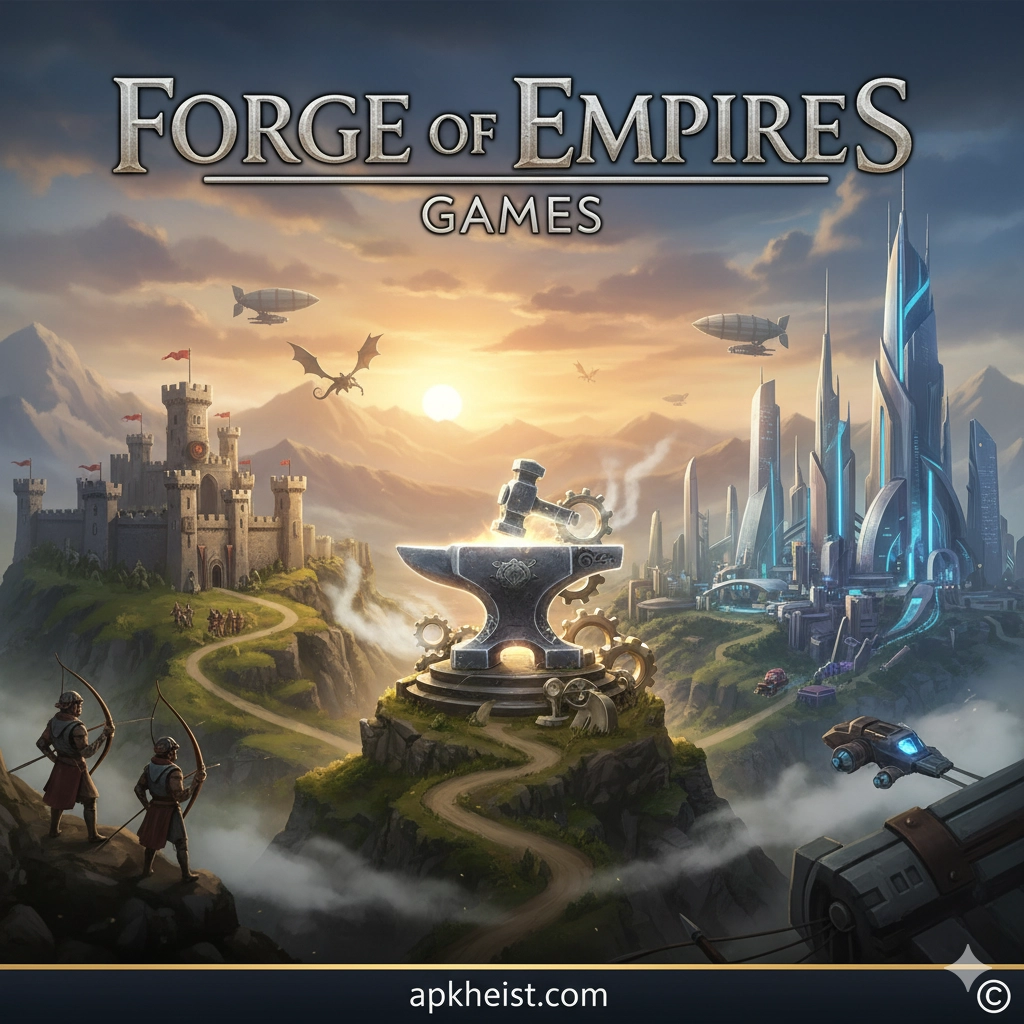
In the crowded world of online strategy titles, Forge of Empires Games stands out as a carefully balanced mix of city-building, tactical combat, diplomacy, and long-term planning. Developed to reward patience and intelligence rather than reflexes, the game invites players to guide a small Stone Age settlement into a powerful futuristic empire. Much like other addictive strategy experiences discussed in Hades' Star Games: Why Is This Deep Spac, Forge of Empires thrives on depth, progression, and meaningful choices that unfold over time.
Table of Contents
1. Core Gameplay Philosophy – How long-term planning defines success
2. City Building and Resource Management – Designing an efficient empire
3. Era Progression and Historical Depth – Moving from the Stone Age to the future
4. Tactical Combat and Army Composition – Strategy beyond brute force
5. Social Features and Guild Warfare – Power through cooperation
6. Events, Quests, and Replay Value – Why players keep coming back
1. Core Gameplay Philosophy
At its heart, Forge of Empires Games is built around strategic foresight. Players are not rewarded for rushing blindly through ages but for understanding systems, optimizing layouts, and planning upgrades carefully. Every decision—where to place a building, when to advance an era, or whether to negotiate or fight—has lasting consequences.
This slow-burn design philosophy mirrors successful long-term strategy ecosystems often seen in Strategy titles. The game teaches players that efficiency compounds over time, making early smart decisions incredibly valuable in later eras.
2. City Building and Resource Management
City building in Forge of Empires Games goes far beyond aesthetics. Each structure affects population, happiness, production speed, and space efficiency. Players must constantly balance residential buildings, production facilities, cultural sites, and military structures.
Space is the most limited resource, forcing meaningful trade-offs. Much like insights shared in The Grand Mafia Games: Why This Crim, mastery comes from understanding underlying mechanics rather than simply expanding endlessly.
3. Era Progression and Historical Depth
One of the defining features of Forge of Empires Games is its era-based progression system. Players advance through distinct historical periods, each introducing new buildings, units, and technologies. From medieval castles to industrial factories and futuristic megastructures, each age reshapes gameplay priorities.
Advancing too quickly can cripple an empire if production and defenses are unprepared. This measured progression encourages thoughtful pacing and rewards players who fully optimize each era before moving forward.
4. Tactical Combat and Army Composition
Combat in Forge of Empires Games is turn-based and deeply tactical. Units have strengths, weaknesses, terrain advantages, and synergy effects. Victory often depends more on positioning and composition than raw numbers.
Players can choose to manually control battles for maximum efficiency or automate them for convenience. This flexibility makes the game accessible to casual players while still offering depth for competitive strategists, similar to trends seen across Role Playing and strategy hybrids.

5. Social Features and Guild Warfare
Guilds play a central role in Forge of Empires Games. Cooperative features such as Guild Expeditions and Guild Battlegrounds introduce large-scale strategic coordination, shared rewards, and competitive ranking systems.
Active guild participation accelerates progress dramatically. The social dimension transforms the experience from a solo city-builder into a dynamic multiplayer ecosystem, reinforcing long-term engagement and strategic diversity.
6. Events, Quests, and Replay Value
Seasonal events, limited-time quests, and rotating challenges keep Forge of Empires Games fresh year after year. These events often introduce unique buildings with powerful bonuses, encouraging players to log in consistently and refine their strategies.
The layered quest system also acts as a guided learning tool, gradually introducing advanced mechanics while maintaining a steady sense of achievement. This design philosophy aligns with retention strategies explored in articles like Stick Battle Games: Why Simple Stick Figures, where simplicity supports depth.
Frequently Asked Questions About Forge of Empires Games
Is Forge of Empires Games free to play?
Yes, Forge of Empires Games is free to play, with optional premium features that accelerate progress but are not strictly required for success.
Can Forge of Empires Games be played casually?
Absolutely. While the game rewards long-term planning, it is well-suited for casual daily play, allowing players to progress at their own pace.
Does advancing eras too quickly cause problems?
Yes. Rushing eras without adequate infrastructure can lead to resource shortages and weaker combat performance.
Are guilds mandatory in Forge of Empires Games?
Guilds are not mandatory, but joining one significantly enhances rewards, social interaction, and overall progression speed.
Why has Forge of Empires Games remained popular for so long?
The game’s enduring popularity comes from its evolving content, strategic depth, and balanced progression system that continuously challenges both new and veteran players.