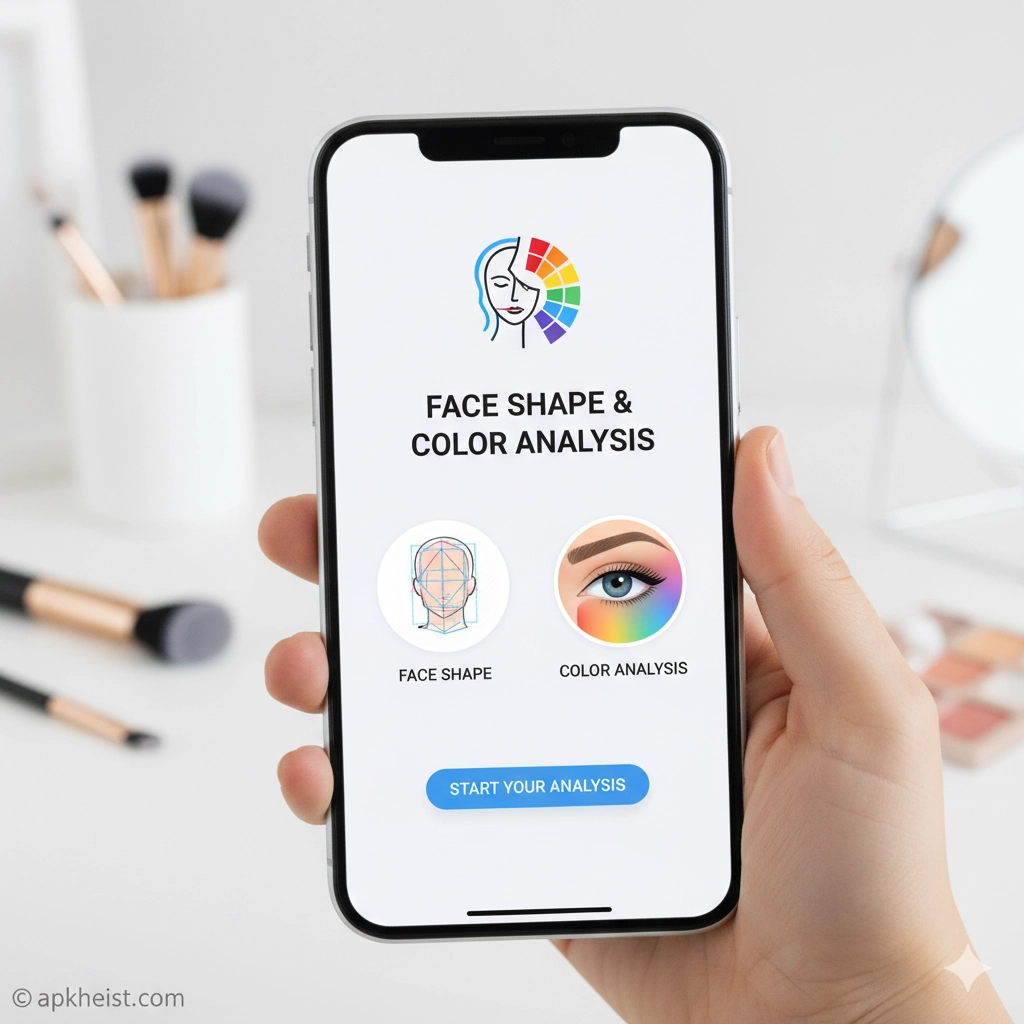
In the modern beauty world, personalization is everything. A Face Shape & Color Analysis App combines artificial intelligence, computer vision, and beauty science to analyze facial features, skin undertones, and symmetry. By simply uploading a selfie or using the device camera, the app can determine whether your face shape is oval, round, square, heart-shaped, or diamond. It also evaluates color undertones to recommend ideal makeup shades, hairstyles, glasses, and clothing colors. This technology helps users make confident beauty choices without guesswork. For beauty enthusiasts, influencers, stylists, and everyday users, these apps act as digital consultants that provide instant, data-driven recommendations tailored to each individual.
Table of Contents
1. What Is a Face Shape & Color Analysis App – Understanding the purpose and technology behind modern beauty analysis tools.
2. How AI Detects Facial Shapes Accurately – Exploring the facial recognition algorithms used in these apps.
3. The Science Behind Personal Color Analysis – Why skin undertones matter when choosing makeup and fashion.
4. Beauty Recommendations Based on Face Shape – Hairstyles, glasses, and makeup that match different facial structures.
5. Benefits of Using a Face Analysis App – Why these tools are becoming essential in digital beauty routines.
6. Integrating AI Beauty Tools with Other Apps – How beauty apps work alongside editing and selfie applications.
7. Privacy and Data Considerations in Face Analysis Apps – Understanding how user photos are processed and protected.
8. The Future of AI-Powered Beauty Technology – How machine learning will transform personal styling and cosmetics.
1. What Is a Face Shape & Color Analysis App
A Face Shape & Color Analysis App is a digital tool designed to evaluate facial structure and personal color characteristics using advanced artificial intelligence. By analyzing facial landmarks such as the jawline, cheekbones, forehead width, and chin shape, the app determines the user’s face category. At the same time, color analysis algorithms assess skin undertones, eye color, and hair shade to identify a user’s most flattering color palette.
These apps simplify beauty decisions that once required professional stylists. Instead of visiting a salon or color consultant, users can obtain personalized style insights within seconds. Many apps also include beauty simulations, makeup previews, and hairstyle suggestions.
Modern beauty platforms like Perfect365 Makeup Photo Editor App: Th have already demonstrated how AI can enhance digital beauty experiences by providing virtual makeup tools and smart facial adjustments.
2. How AI Detects Facial Shapes Accurately
AI-powered face analysis systems rely on computer vision models trained on millions of facial images. These models detect hundreds of facial landmarks including eyebrow placement, cheekbone width, jaw angle, and forehead height.
By measuring the geometric relationships between these points, the algorithm determines the most accurate face shape classification. For example, a round face has balanced width and height proportions, while a square face typically features a strong jawline and straight sides.
This technology is similar to the algorithms used in creative tools such as FunSwap - AI Face Swap App: The Ultim, where advanced facial detection allows seamless face swapping and visual transformations.

3. The Science Behind Personal Color Analysis
Personal color analysis focuses on identifying the colors that naturally complement an individual’s skin tone and undertone. Typically, color theory divides people into warm, cool, neutral, or olive undertones.
A Face Shape & Color Analysis App evaluates subtle variations in skin pigmentation, lighting conditions, and contrast levels to determine the most harmonious color palette. Based on this data, the app recommends suitable lipstick shades, foundation tones, clothing colors, and even jewelry metals.
Beauty technology platforms like Hwahae (Korea’s Beauty APP) App: The U also utilize AI analysis to help users understand beauty products and ingredients that suit their skin type.
4. Beauty Recommendations Based on Face Shape
One of the most useful features of face analysis apps is their ability to provide customized beauty advice. Once a face shape is identified, the app can recommend hairstyles, eyebrow shapes, glasses frames, and makeup contouring techniques.
For instance, individuals with round faces may receive suggestions for layered hairstyles that create vertical length. Meanwhile, square faces might benefit from soft waves that balance angular jawlines.
Beauty editing tools like Beauty Plus Camera - Selfie Cam App: T allow users to experiment with different looks and visualize how suggested styles might appear in real photos.
5. Benefits of Using a Face Analysis App
The growing popularity of AI beauty apps can be attributed to several advantages. First, they provide instant feedback without requiring professional consultation. Second, they offer highly personalized insights tailored to each user's unique facial features.
These apps also help users avoid costly beauty mistakes by recommending styles and colors that naturally enhance their appearance. Additionally, they encourage experimentation and creativity, allowing users to test new looks virtually before making real-world decisions.
Platforms that combine beauty discovery and appointment booking, such as Booksy for Customers App: The Smart, demonstrate how digital tools can streamline both beauty inspiration and service scheduling.
6. Integrating AI Beauty Tools with Other Apps
Face analysis technology rarely operates in isolation. Many apps integrate with selfie cameras, beauty editors, and appointment platforms to create a complete digital beauty ecosystem.
For example, after analyzing face shape and color palette, a user might apply suggested makeup styles using virtual editors or schedule a salon appointment directly through connected service apps.
Solutions like StyleSeat: Book Hair & Beauty App – The illustrate how digital platforms can bridge the gap between AI recommendations and real-world beauty services.
7. Privacy and Data Considerations in Face Analysis Apps
Since face analysis applications rely heavily on image data, privacy is an important consideration. Reputable apps typically process images using secure servers or on-device machine learning to protect user data.
Users should review privacy policies and ensure that their photos are not stored or shared without consent. Many apps also allow images to be deleted automatically after analysis.
As facial recognition technology continues to advance, developers are focusing more on ethical AI practices and transparent data policies.
8. The Future of AI-Powered Beauty Technology
The future of beauty technology is closely tied to artificial intelligence and machine learning innovation. In the coming years, face analysis apps may become even more sophisticated, offering real-time beauty coaching, AR-powered makeup tutorials, and predictive skincare recommendations.
These platforms may also integrate wearable devices, dermatology data, and lifestyle insights to create a fully personalized beauty ecosystem.
As AI continues to evolve, tools like the Face Shape & Color Analysis App will likely become everyday companions for individuals seeking smarter, more personalized beauty decisions.
Frequently Asked Questions (FAQ)
What does a Face Shape & Color Analysis App do?
A Face Shape & Color Analysis App evaluates facial structure and skin undertones using artificial intelligence. It then recommends hairstyles, makeup shades, glasses, and clothing colors that complement the user’s natural features.
Are face analysis apps accurate?
Most modern face analysis apps are highly accurate because they rely on advanced machine learning models trained on large datasets of facial images. However, lighting conditions and camera angles can influence results.
Can these apps recommend makeup products?
Yes. Many apps suggest foundation shades, lipstick colors, eyeshadow palettes, and contour techniques based on facial shape and skin undertone analysis.
Do face analysis apps store user photos?
It depends on the app. Some process images locally on the device, while others temporarily upload images to secure servers for analysis. Users should always review the app’s privacy policy.
Who can benefit from using a Face Shape & Color Analysis App?
Anyone interested in improving their personal style can benefit from these apps. They are especially useful for beauty enthusiasts, makeup artists, fashion stylists, and individuals exploring new looks.