The Amovens App operates within the rapidly expanding peer-to-peer mobility ecosystem, positioning itself as a practical alternative to traditional car rental services. By leveraging a community-based model, the platform enables private individuals to monetize underutilized vehicles while offering renters competitive pricing and flexible booking options. Built around trust, verification, and insurance-backed security, Amovens integrates digital identity validation, secure payment systems, and transparent review mechanisms. In a market increasingly focused on sustainability, shared mobility, and cost optimization, the app aligns with modern transportation trends by reducing idle vehicle time and promoting more efficient asset utilization.
Contents Overview
1. How Amovens App Works – A breakdown of the operational model and booking flow.
2. Key Features and Functional Capabilities – Core tools that differentiate the platform.
3. Security, Insurance, and User Verification – Risk mitigation and trust-building mechanisms.
4. Cost Structure and Revenue Model – Pricing logic for owners and renters.
5. Sustainability and Urban Impact – Environmental and mobility implications.
6. Comparing Amovens with Traditional Rental Services – Strategic positioning in the mobility market.
1. How Amovens App Works
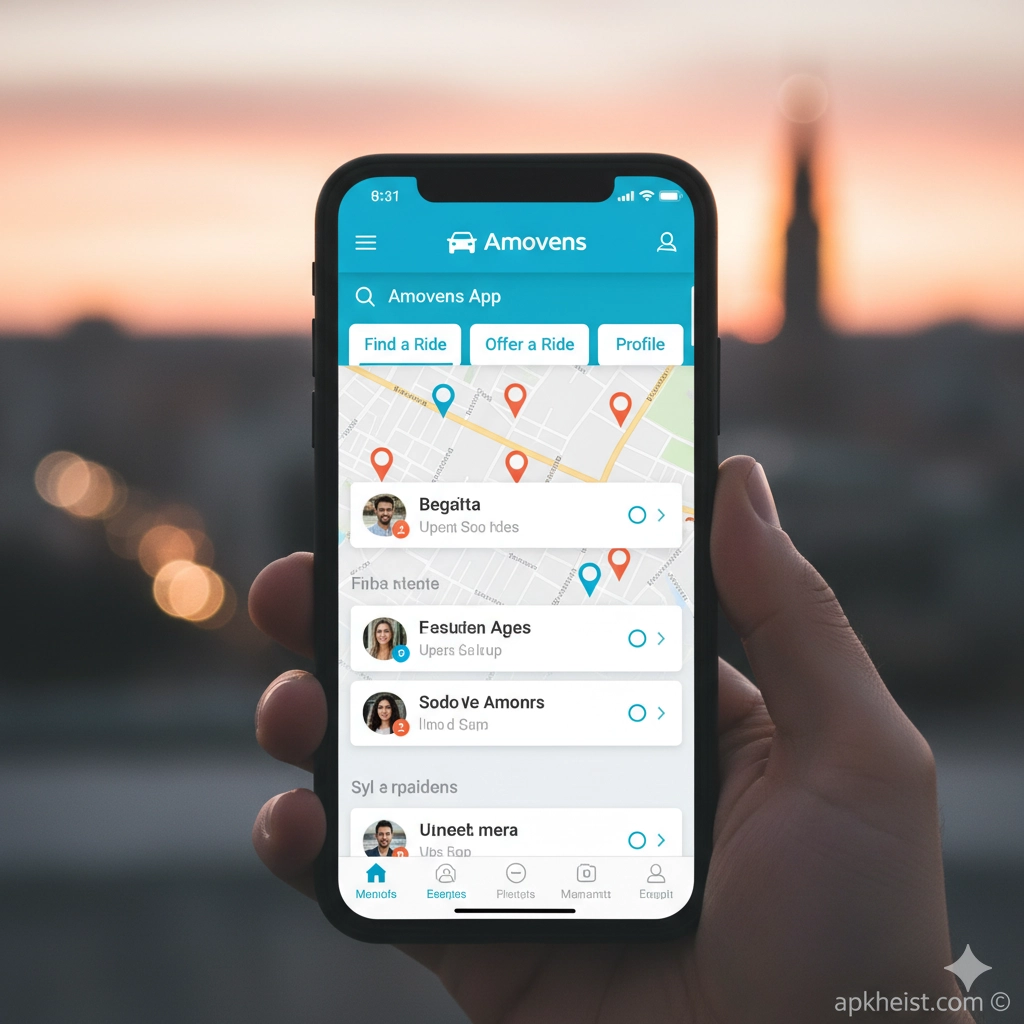
The Amovens App functions as a two-sided marketplace. Car owners list their vehicles, defining availability, pricing, and usage conditions. Drivers search for vehicles based on location, time frame, and vehicle type. Once a booking request is submitted, the owner approves the rental, and payment is processed securely within the platform.
The system integrates digital contract agreements, insurance activation during rental periods, and in-app communication channels. The workflow emphasizes simplicity: search, request, confirm, unlock, and return. This streamlined process reduces friction typically associated with traditional rental counters and paperwork-heavy agreements. By digitizing the entire lifecycle of a rental transaction, Amovens improves operational efficiency and user convenience.
2. Key Features and Functional Capabilities
Core features include advanced search filters, dynamic pricing configuration, integrated insurance coverage, and real-time booking management. Vehicle owners can monitor booking performance, manage calendar availability, and adjust rates based on demand patterns. Drivers benefit from transparent vehicle details, verified reviews, and secure payment processing.
The app’s UX design prioritizes intuitive navigation and minimal onboarding friction. Push notifications, booking reminders, and support integration enhance user retention. In contrast to fitness-oriented platforms like Orangetheory App: The Intelligent Performance Tracking Platform, Amovens focuses on mobility logistics rather than personal performance tracking, yet both share an emphasis on digital optimization and user engagement.
3. Security, Insurance, and User Verification
Trust infrastructure is central to the Amovens ecosystem. Identity verification procedures help minimize fraud and misuse. Insurance coverage is automatically activated for the duration of each rental, protecting both vehicle owners and drivers.
User ratings and feedback loops create a self-regulating community environment. This layered risk mitigation framework ensures that peer-to-peer transactions maintain a professional-grade safety standard, comparable in digital reliability to service-oriented platforms like IMSS Digital App: The Official Gateway to Mexican Social Security Services, where identity and trust protocols are equally critical.

4. Cost Structure and Revenue Model
The pricing model is structured around daily rental rates set by vehicle owners, with the platform earning a commission per completed transaction. Owners can generate passive income from idle assets, while renters often benefit from lower rates compared to conventional rental agencies.
Dynamic market-based pricing allows supply-demand equilibrium within specific geographic regions. Unlike wellness tracking solutions such as Avena Health App: The Intelligent Digital Companion, where value is measured in preventive care outcomes, Amovens quantifies value through utilization efficiency and economic return on physical assets.
5. Sustainability and Urban Impact
Car sharing reduces the necessity for private vehicle ownership, particularly in dense urban areas. By increasing utilization rates of existing vehicles, the Amovens model contributes to lower overall resource consumption and potentially reduced carbon emissions.
Urban mobility ecosystems increasingly integrate shared transportation models alongside public transit and micro-mobility services. The environmental logic mirrors digital wellness initiatives such as Plum Village: Mindfulness App – A Practical Path to Everyday Awareness and Inner Peace, where resource optimization applies to mental bandwidth rather than transportation infrastructure.
6. Comparing Amovens with Traditional Rental Services
Traditional car rental agencies operate with centralized fleets, fixed pricing structures, and physical branch locations. Amovens decentralizes fleet ownership, enabling distributed supply through private individuals. This peer-based model reduces overhead and increases geographic coverage flexibility.
Where conventional services emphasize standardized fleet control, Amovens prioritizes flexibility, personalization, and cost efficiency. The shift reflects broader digital transformation patterns seen across industries—from health and fitness platforms like Basic-Fit App: The Smart Digital Companion to other app-driven service ecosystems.
Frequently Asked Questions (FAQ)
1. Is Amovens App safe to use?
Yes. The platform incorporates identity verification, insurance coverage during rentals, and transparent review systems to ensure user safety and transactional security.
2. How does Amovens App make money?
Amovens generates revenue through commission fees applied to each completed rental transaction processed within the app.
3. Can I list my car on Amovens App at any time?
Yes. Vehicle owners can define availability schedules and pricing parameters directly within the app interface.
4. Is insurance included in every rental?
Insurance coverage is typically activated automatically for the duration of each approved booking, protecting both parties involved.
5. How is Amovens different from traditional car rental companies?
Amovens operates on a peer-to-peer sharing economy model rather than maintaining a centralized fleet, resulting in greater flexibility and potentially lower costs for users.
Conclusion: The Amovens App exemplifies the evolution of decentralized mobility platforms. By combining digital verification, flexible pricing, and community-based asset sharing, it provides a scalable alternative to traditional car rental systems while supporting broader sustainability objectives.